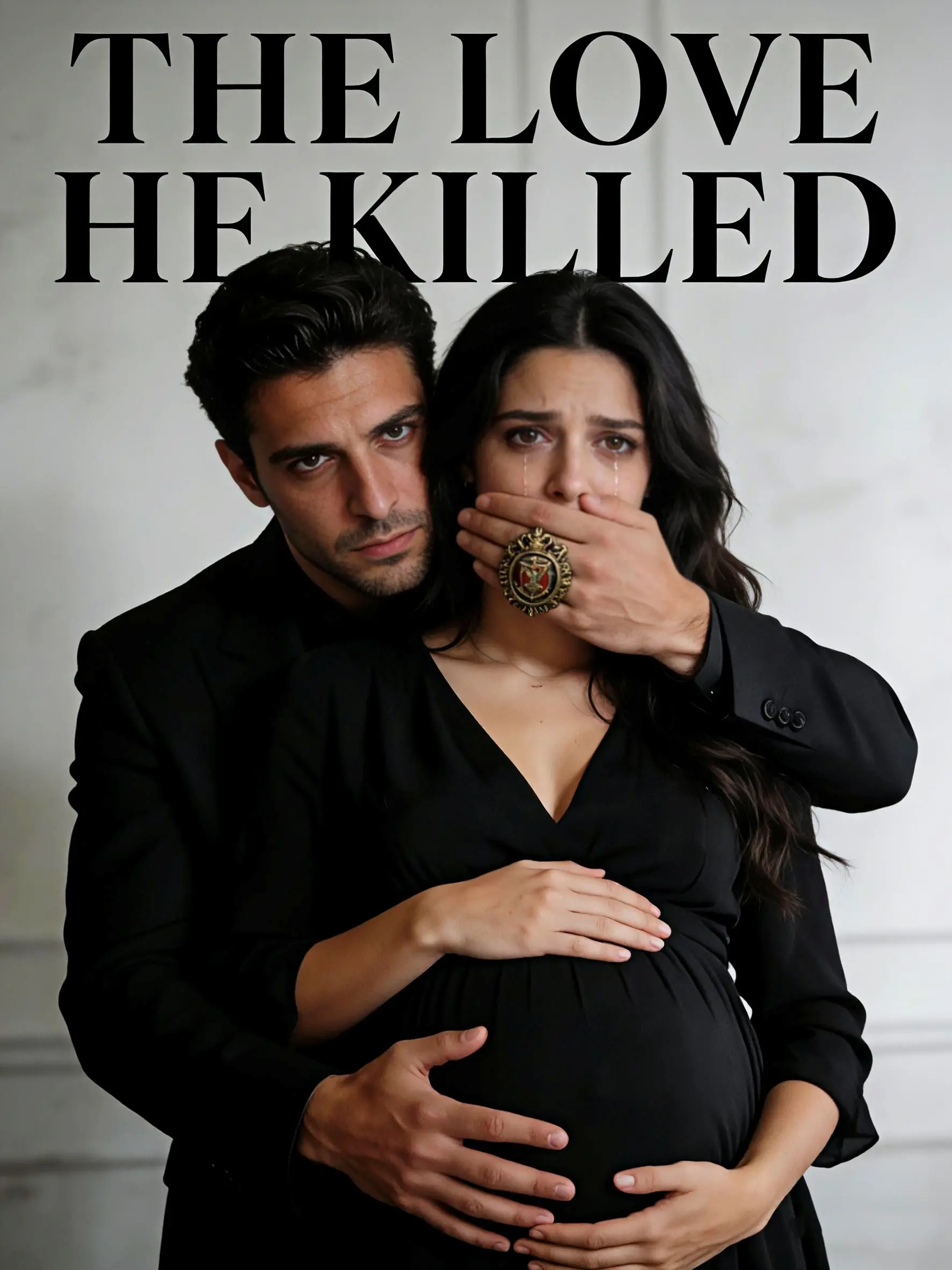
Prologue
I saved a wounded stranger.
I hid him in my apartment for a week.
He vanished without a word.
Now, men with guns are at my door, asking about the man I knew as Leo.
And the city's most feared Mafia King just walked in, his eyes locking on me.
"She's under my protection," he says, his voice cutting through the tension.
But his protection feels like a gilded cage.
"You saved me once," he murmurs, his voice a dark promise meant only for my ears. "Now, it's my turn to save you."
The Wounded Stranger
The rain was turning the back alley into a river of grime and reflected neon. I was taking out the trash, the plastic bag slick in my hand, thoughts already on the warm, dry inside of the bar and the tips I’d counted in my apron. That’s when I saw him.
A dark shape, slumped against the wet brick wall, half-hidden behind the dumpster.
My first instinct was to run. This part of the city taught you that. Trouble wasn’t something you sought; it found you, and it was best to be elsewhere when it did.
But he wasn’t moving.
And the dark patch spreading across the side of his cheap-looking jacket wasn't just rainwater. It was too thick, too dark.
"Hey?" I called out, my voice barely a whisper against the drumming rain. "Are you okay?"
No response.
Cursing my own stupidity, I crept closer. The metallic tang of blood hit my nostrils, cutting through the smell of rotting food and wet concrete. He was a man, maybe in his early thirties, with sharp, aristocratic features that seemed utterly out of place in this alley. Even unconscious, pale and bleeding, there was an intensity to him. His clothes were nondescript, but his hands… his hands were clean, with strong, capable fingers. These weren't the hands of a drifter.
He was bleeding from a gash on his torso. A knife wound. This was bad. This was call-the-cops bad.
But something held me back. The sheer, unnatural stillness of him. The way he seemed to be holding onto consciousness by a thread, a thread that would snap if I brought the chaos of the police and paramedics down on him.
"Stupid, Chloe. So stupid," I muttered to myself, dropping the trash bag and kneeling beside him. His skin was cold. He was going to die out here.
I couldn't let that happen.
Somehow, with a strength I didn't know I possessed, I managed to get him to his feet, his arm draped over my shoulders. He was heavy, all solid muscle. I half-dragged, half-carried him through the back door of my apartment building, up the two flights of stairs, my heart hammering against my ribs like a trapped bird. Every creak of the floorboards sounded like a gunshot.
I got him onto my bed. The blood immediately started seeping into my cheap floral duvet cover.
For the next hour, I worked in a frantic, focused silence. I boiled water, found my ancient first-aid kit, and used a pair of tweezers to carefully clean the wound. It was deep, ugly, but it looked clean. No sign of infection. As I stitched it up—a skill I’d learned from a brief, misguided stint as a veterinary assistant—he stirred only once. His eyes, a shocking, stormy grey, flickered open for a second, hazy with pain and drugs.
"Don't," I said softly, pressing a clean cloth against the wound. "Just lie still."
His gaze focused on my face for a fleeting moment, intense and searching. Then his eyelids fluttered shut again.
The first two days, he drifted in and out of consciousness. I fed him broth, gave him water, changed his bandages. He never spoke, only watched me with those unnervingly perceptive grey eyes. I started calling him "Leo" in my head, for no reason other than it seemed to suit the sharp, quiet lines of his face.
On the third day, he was lucid enough to sit up.
"Who are you?" he asked. His voice was rough from disuse, but underneath the gravel, it was a low, commanding baritone. It didn't match his "victim" persona at all.
"Chloe," I said, handing him a glass of water. "I'm the one who found you bleeding out in an alley. Who are you?"
He ignored my question, his eyes scanning my small studio apartment, taking in every detail—the second-hand furniture, the books stacked on the floor, the single window looking out onto the fire escape. It was an assessing, calculating look.
"You shouldn't have brought me here," he said finally, his tone flat. "It was… unwise."
"Letting you die seemed less wise," I retorted, crossing my arms. "What happened to you?"
"Something I should have avoided." He took a sip of water, his movements economical and precise, despite his weakness. "Thank you. For your… assistance."
It was the least grateful thank you I'd ever heard.
As the days turned into a week, a strange, tense routine settled between us. He never left the bed, but his presence seemed to fill the entire apartment. I’d go to work at the bar, serve drinks with a smile, and come home to this silent, wounded predator in my bed. I’d bring him food, and he’d eat with a quiet focus that was almost ritualistic. We spoke little, but the silence wasn't entirely uncomfortable. It was charged, like the air before a storm.
One night, I woke up to find him standing by the window, his silhouette a dark cut-out against the city lights. He was shirtless, the bandage on his torso a stark white in the gloom. He moved with a predatory grace that made my breath catch. This was no ordinary man.
"Don't ask for my name," he whispered into the darkness, sensing I was awake. His voice was a low vibration that I felt in my bones. "Not yet."
I didn't ask. I just watched him, this beautiful, dangerous mystery I’d invited into my life. A part of me knew he was right. This was unwise. But another part, a part I hadn't known existed, was thrilling to the danger.
The following evening, I came home from a double shift, exhausted. The apartment was silent. Too silent.
"Leo?" I called out.
No answer.
A cold dread trickled down my spine. The bed was made, the sheets straightened. The used bandages and medical supplies were gone from the trash. It was as if he had never been there at all. The only evidence was the faint, lingering scent of his skin—clean soap and something darker, metallic, like a storm—on my pillows.
And the deep, unsettling silence of an empty space that now felt infinitely larger, and lonelier, than it ever had before.
He was gone.